Sunday, October 12, 2008

Bioshock (Xbox 360) Review

Bioshock (Xbox 360) Review

Add Image


After I finished playing Bioshock, I knew immediately that I’d played an amazing game. That feeling after finishing a game where the game just sticks with you, I felt that with Bioshock. It was an incredibly emotional game. The mystery of the world of Rapture sticks with you long after the game ends. And yet, frankly, at first I had a hard time summing what it was that made Bioshock so amazing. It really left me at a loss for words, and I had to postpone writing this review for several days so I could actually figure out what made the game so amazing.

For starters the atmosphere in Bioshock is amazing. And by atmosphere I mean more than visuals. Sure, the visuals are amazing (a bit on that in a minute), but the whole game’s presentation is just immersive and amazing. I don’t think I’ve ever felt so totally involved in a game before. The world of Rapture is just so intriguing and well conceived that, despite it’s obvious sci-fi setting, it seems almost plausible. The world is well developed; it’s as if the developers actually mapped out every square inch of Rapture. The problem with all of this is that, while the city of Rapture is presented as being this huge underwater world, you really feel confined to the small corridors and buildings the game lets you into. A breathtaking opening cinematic makes Rapture feel huge, but you’ll quickly feel disappointed once you find out you’re constrained to the path the developers put you on. With all the attention to detail in the world, it’s a shame that they confined you so much.

Bioshock is visually a treat. The moody lighting is just so well done, and many of the creepy set pieces will stick with you long after you’ve passed them up. The models are textures are equally impressive, and I never noticed any major frame rate issues. The game is littered with special effects, and none of them feel cheap or lazy. The way the world interacts with you, and with itself, is also quite amazing. The visual appeal (not to mention gameplay appeal) of being able to send a bolt of lightning at a puddle of water and fry the person standing in it is just so pleasing. Even today I think that Bioshock is a testimony to what the Xbox 360 can do visually when a group of talented developers are really up to the challenge.

Add Image

The audio never goes wrong, either. Eerie sound effects, spooky music, and amazing voice acting is aplenty in this game. One of the more interesting things about this game’s soundtrack (a tip of the hat to Half-Life, perhaps) is the fact that your character never speaks. And, just as in Half-Life, this only ramps up the immersive factor of the game. Putting some generic voice on the hero would really only cheapen then soundtrack. Guns sound satisfying to shoot, and the sound effects when you’re shooting fire or lighting are also very satisfying. The whole soundtrack is a tight package used to wrap you up in the game’s immersive environment.

The gameplay is also well done. The way this game so seamlessly fuses the audio and visuals into the gameplay makes this game easily one of the most satisfying 360 games you can buy. As you go through Bioshock you’ll acquire things called plasmids. These plasmids are used to, literally, modify your genetic code. These modifications are used to allow you to do special things like shoot lighting or fire, or give you telekinesis. The plasmids also often times are necessary to complete some of the game’s puzzles, although it will mostly be immediately obvious if you need a certain plasmid to progress. The way the plasmids allow you to interact with the environment makes for some of the most fun there is to be had in Bioshock. Shoot some lighting at a puddle at watch anyone in the puddle shock to death; send some fire towards a path of gasoline and watch the whole path burn, taking anyone in or around the path with it. It’s really these small details that make the plasmid system so fun and entertaining. Really, though, the shame is that most of the time you’ll discover the easiest way to kill an enemy is the most boring. Shocking an enemy will temporarily stun them, and a solid hit with the wrench will take most basic enemies to the ground without problem. Unfortunately, this means that often times you’ll throw creativity out the window in favor of discarding the basic enemies faster. It would have been better had the developers put you in more situations where you were encouraged to use the plasmids in a creative manner. Even at that, though, the plasmids are still satisfying enough that this is only a minor gripe. The weapons, on the other hand, lack the satisfaction of the plasmids. Most of the weapons feel sort of underpowered in comparison to the plasmids. For most of the games your weapons will be your secondary means of attack. This does admittedly make the game feel a bit unbalanced at times. The game also incorporates a hacking mini game into the fun. Basically, the hacking mini game consists of flipping and switching tiles to send some ooze from one spot to another. These hacking mini games can range from incredibly easy to maddeningly hard. Hacking is never required to progress, though, so if you start to feel too frustrated with one of the hacks you can proceed without it.

Difficulty can be a major concern for some games, and this is one of Bioshock’s biggest weaknesses. The game is too easy. The game world is littered with Vita-Chambers, and should you die, you’ll respawn in one of these Vita-Chambers. To make matters worse, any damage you’ve dealt to an enemy prior to death will still be in effect, meaning that you can haphazardly shoot away at enemies until you kill them, and dying will never be a concern. Luckily the Vita-Chambers can be turned off. In either case, even with a difficulty on the easy side it doesn’t mess too much with the game’s overall quality.

The story of Bioshock is one of intrigue. Unfortunately, it’s too hard to easily put into words. Thankfully, though, the game does an excellent job pushing you along through the story without having it intrude too much into your fun. An interesting note is that throughout the game you have the opportunity to save or harvest things called Little Sisters. The problem, of course, is that Little Sisters are protected by Big Daddies. After killing the Big Daddy (these are pretty much the hardest things in the entire game to kill), you’ll have a moral choice to make. You can either harvest the Little Sister (essentially getting more adam but sacrificing the Little Sister in the process), or you can save her (this will give you less adam, but you’ll get the moral satisfaction of knowing that the little girl is alive and no longer possessed). Throughout the course of the game this decision will come up many times, and you’ll never be tied to the same decision you made before, so if you decide you want to harvest one Little Sister after saving another, go ahead. This whole moral aspect of the game can be quite interesting at first, but over time it seems to get more in the way.

One of my biggest gripes about Bioshock is its total lack of a multiplayer component. Being able to play through parts of the story with a second player would have been awesome, but I suppose co-op was a worthwhile sacrifice to give you that immersive experience. Bioshock wouldn’t have lent itself at all to deathmatch-style multiplayer, though, so I suppose perhaps the lack of a multiplayer component was for the better. Still, in 2008 a FPS game feels unfinished if there isn’t any sort of multiplayer included.

At the end of the day, Bioshock is just an incredible experience all the way through. The story is a bit short-lived, but you’ll never feel cheated by it, either. Bioshock has created one of the most immersive worlds of any video game I’ve played to date. The whole game just drips with style and atmosphere unmatched by anything else out there. If you’re in the market for a good, worthwhile FPS game, Bioshock should definitely be your top purchase choice.

Gameplay: 9.5
Visuals: 10
Audio: 9.5
Fun Factor: 10
Overall: 10

Thursday, October 9, 2008

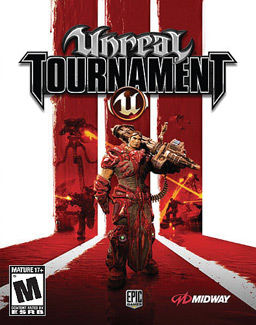
Unreal Tournament 3 (PC) Review

Unreal Tournament games have been one of the staples of online FPS gaming. Their fast-paced, arena-style gameplay makes for a great online experience. The multiple modes on online play adds enough variety that you won't get bored with the standard deathmatch games. Unreal Tournament 3 doesn't take a whole lot of risks. It does pretty much what the series has always done...and it does it damn well.

Unreal Tournament veterans won't have any problems jumping into the new installment. It plays very similar to previous installments, albeit a few mode changes and additions. The modes included in Unreal Tournament 3 are deathmatch , team deathmatch, capture the flag, vehicle capture the flag (same as capture the flag but with bigger maps that encourage the use of vehicles), warfare (team-based gameplay; take control of nodes scattered around the map to destroy the opposing team's main node), and duel (a one-on-one match with other plays simply acting as spectators). The mode that I have the biggest gripe over is the warfare mode. Perhaps it's simply because I suck at online FPS games, but it's extremely hectic and can get overly complex at times. Nevertheless, the online experience is the meat of the game, and if you really want to get your money's worth you'd do good to play it online.

The game's campaign mode (as always) only serves to train you for online play. Odds are good that most Unreal Tournament veterans will skip the campaign mode altogether, which would be a bit of a shame. Instead of being a simple tournament, the campaign mode now has a story about a war going on that you're caught up in the middle of. Throughout the course of the campaign mode there are branches where you can start doing missions in the order that you want to do them in. Really, though, once you look past the superficial story you're still playing the same campaign you played before. Even at that, the direction they took the campaign drastically improves the presentation of it if nothing else. The other cool addition to the campaign mode is that you'll get cards as you play through the campaign. These cards will allow you to do certain things (lower enemy count by two, for example) on missions of your choice. This is an interesting way to give the player a handicap if there's a mission they just can't get beyond. The interesting thing about the campaign mode is that you now play it online with other people, which is a pretty awesome addition if you and a buddy want to team up on those bots.


Visually Unreal Tournament 3 is a treat. Even on mid-range machines the game will run at a solid 45-50FPS on medium detail, and medium detail looks good. The game has a gritty, war-torn look to it as opposed to the more metallic, arena look of previous games. Even where there were ten or more characters on screen with bullets flying every which way, the framerate never dropped.

The audio for Unreal Tournament 3 is pretty much what it's been in the past. The interesting thing about this type of game is how it seems they all use the same sound bytes. The game does lack much in the way of ambient sound, but it doesn't matter because you'd never have the time to enjoy it if it was present. You'd be too busy shooting.

Really I don't know what bad thing I can say about Unreal Tournament 3. It's everything I expected it would be. I never felt disappointed with any aspect of the game (except the fact that I'm no good at it online). Still, I can't really quite say it's perfect either. There's no flaws per se, but the game does have a kind of "been there, done that" feel to it. The few risks that Epic made paid off, but not in a big enough of a way that I really felt like it was a new game. More like a fresh coat of paint on an old game. Still, for $20 (for the PC version) there's no reason not to buy it if you're a fan of the FPS genre, even if you (like me) are no good at playing them online. It doesn't matter, because you'll have a damn good time losing.

Gameplay: 9.0

Visuals: 9.5

Audio: 8.5

Fun Factor: 10.0

Overall: 9.5

Wednesday, October 8, 2008

Calling All Game Designers...!!!

Okay...so you're sitting in your office, looking at all of today's biggest games and wondering how you can make them better. You're playing them for hours and hour, taking notes on every minuscule gripe you can find about the game so you can go back, reformat the game the way you want it, and have yourself a hit.

The proceeding story is, sadly, a true one. This seems to be the basic game design process that game designers go through when making new games. They've tossed originality, art, out the window in favor of pleasing the business minds that run the publishing companies. Perhaps the gaming industry was better when it was small; game publishers were as passionate about games as the designers, and didn't enter the business with the intent of making a buck, but rather making a good product. Truthfully, most publishers back then were the same people that put the game together in the first place; the game industry was much smaller and mostly self-funded. Today's business minds see games as a smart business venture. Do they care about the art? No. They only care about what they think they can sell the most of.

Take, for example, Microsoft. Do you think Microsoft entered the gaming arena with any passion for the artform? Doubtful. More likely, Microsoft saw how much money could be made if they entered the arena. Microsoft creature a technically powerful machine capable of doing fantastic visuals (better than the better-selling PS2). The problem was that after Microsoft sunk all this money into developing this system to put out these high-quality grapics, they wanted games to take advantage of the technology. Microsoft didn't want to license their technology to artsy games; they wanted technical showcases.

Even though I bash the Wii for its lack of quality games (an argument I stand by), I will admit that Nintendo has taken the route of gameplay first/graphics last that allows artsy designers to put games out on the Wii. Combine that with the fact that the Wii is the fastest selling system and publishers are actually willing to put out artsy games on the Wii. It's a great system for keeping the art of gaming alive.

Cell Phones of Today...Cell Phones of Tomorrow

I remember back in the old days when cell phones just made calls. That was before handset manufactures started integrated every single handheld item we carried - digital camera, MP3 player, PDA, etc. - into their cell phones. They were primitive, had monochromatic screens...but they did what they were supposed to do, and they did it well.

Phones today are all-in-one devices, Jack-of-all-trade/master-of-none devices that do everything, but do nothing as well as the stand-alone counterpart could. Today's cell phones are decent MP3 players, but the sound quality just isn't up to par with stand-alone MP3 players; they're okay as digital cameras, but don't really replace your stand-alone digital camera in terms of photo and video quality; they can perform all the functionality of a PDA, but with a franction of the speed.

I'm not ripping on these all-in-one phones (I just got my own LG nV2 myself, and I love it), but I think that phones worked better when they just made calls. The quality-for-convenience tradeoff is something that all companies know consumers are willing to make (it's why we go to McDonalds instead of making meals at home).

At this point you're probably wondering if this rant has a point. Well, actually...yes. I make all these points because of one simple thing that I ponder. How will handset manufactures make phones in the future? We've already got several companies manufacturing cell phones with touch screens (quite a nice idea for more convenient navigation). But what devices will we see implemented into our cell phones in the future? Will handset manufactures continue to cram features into our cell phones, overloading them and making them virtually useless due to an oversaturation of features? Or will handset manufactures focus on making cell phones do what they do now better than they currently do it. I know one thing for sure...with people starting to get rid of the home phones in favor of using their cell phones exclusively, cell phones are big business now, and as the cell phone market keeps growing, handset manufactures are going to do everything they can to get as many consumers using their devices...and hopefully using their cell phones to replace some of their old ones.